Georgia’s varied landscape, from the mountains in the north to the coastal plains in the south, presents unique challenges when it comes to stormwater management in commercial site development. At T.W. Brown, we’ve tackled these challenges across the state, developing effective strategies to manage stormwater while complying with regulations and protecting the environment.
Understanding Georgia’s Stormwater Management Regulations
Before diving into specific challenges and solutions, it’s crucial to understand the regulatory landscape. In Georgia, stormwater management is governed by:
- The Georgia Stormwater Management Manual (GSMM)
- Local county and municipal regulations
- Federal Clean Water Act requirements
These regulations aim to control both the quantity and quality of stormwater runoff, protecting waterways and downstream properties from flooding and pollution.
Challenges in Different Georgia Terrains
1. North Georgia Mountains
Challenges:
- Steep slopes increasing runoff velocity
- Thin soil layers over bedrock
- Limited space for traditional detention ponds
Solutions:
- Stepped detention systems
- Infiltration trenches along contours
- Bioretention areas with native plants
2. Piedmont Region
Challenges:
- Clay soils with low infiltration rates
- Rapid urbanization increasing impervious surfaces
- Protection of water supply watersheds
Solutions:
- Enhanced detention pond designs
- Permeable pavement in low-traffic areas
- Green roofs for commercial buildings
3. Coastal Plains
Challenges:
- High water tables
- Flat terrain making gravity drainage difficult
- Protecting sensitive coastal ecosystems
Solutions:
- Raised stormwater systems
- Pumped detention systems
- Constructed wetlands for natural filtration
Innovative Stormwater Management Techniques
Regardless of the specific terrain, several innovative techniques can be applied across Georgia to manage stormwater effectively:
1. Low Impact Development (LID)
LID aims to mimic natural hydrology by managing stormwater at its source. Techniques include:
- Bioretention cells
- Rain gardens
- Vegetated swales
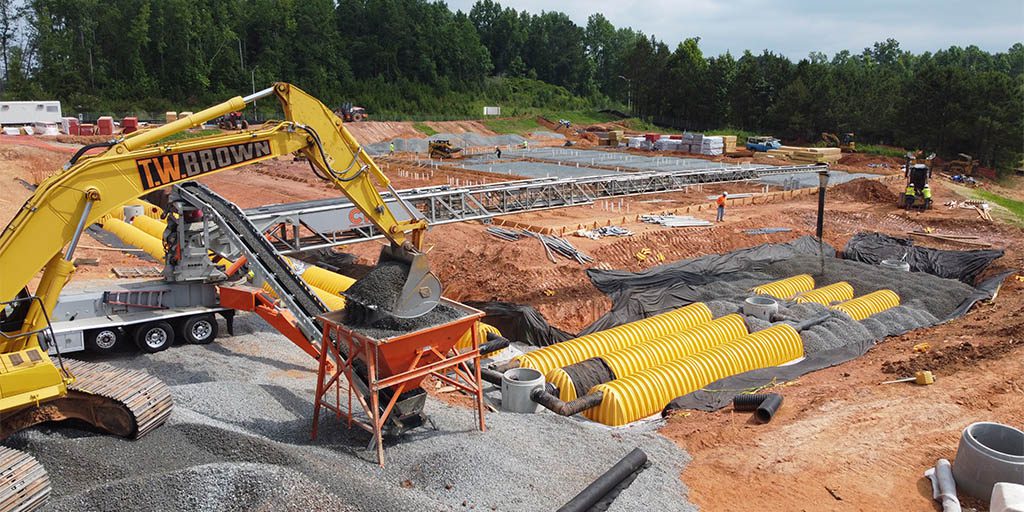
2. Underground Detention Systems
Perfect for sites with limited space, these systems store stormwater underground, allowing for surface use of the land.
3. Smart Stormwater Systems
These systems use real-time monitoring and control to optimize stormwater management, adjusting retention and release based on current and forecasted conditions.
4. Rainwater Harvesting
Collecting and reusing rainwater for irrigation or non-potable uses can significantly reduce stormwater runoff while providing a valuable water resource.
Case Study: Mixed-Use Development in Atlanta
Recently, T.W. Brown worked on a 20-acre mixed-use development in Atlanta’s Piedmont region. The site’s clay soils and high impervious coverage presented significant stormwater management challenges.
Our solution included:
- A series of interconnected bioretention areas
- Permeable pavement in parking areas
- An underground detention system beneath the central plaza
- Smart controls to optimize system performance
The result was a development that not only met all regulatory requirements but also created attractive water features that enhanced the property’s value.
Conclusion
Effective stormwater management is crucial for successful commercial site development in Georgia. It requires a deep understanding of local regulations, terrain-specific challenges, and innovative solutions.
At T.W. Brown, we bring decades of experience in navigating these challenges across Georgia’s diverse landscape. Our team of experts is equipped to design and implement stormwater management solutions that protect your investment, comply with regulations, and contribute to sustainable development practices.
Whether you’re developing in the mountains of North Georgia, the bustling Piedmont region, or the sensitive coastal areas, T.W. Brown has the expertise to ensure your stormwater management needs are met efficiently and effectively.
Contact us today to learn how we can help you navigate the stormwater management challenges of your next commercial project in Georgia.